
Shared Ownership Mortgage 2026 | The Complete Honest Guide
A shared ownership mortgage lets you buy 10% to 75% of a home instead of the whole thing, and pay rent on the bit you don’t own. On paper, that sounds like an obvious win for anyone priced out of buying outright — smaller deposit, smaller mortgage, a genuine foot on the ladder. In practice, it’s more nuanced than most of the marketing around it suggests, with real costs and a rent formula that catches people who didn’t read the small print carefully enough.
Here’s exactly how it works, what it actually costs, and the parts nobody explains properly before you sign.
Site editor at MortgageToolsHub — shared ownership mortgage figures cross-checked against current UK scheme rules and provider data. Last checked July 2026.
On This Page
- How a shared ownership mortgage actually works
- Who can get one
- What it actually costs — a real example
- The rent formula that catches people out
- Staircasing: buying more of your home
- The 1% staircasing rule that changed the game
- What service charges add on top
- The genuine downsides
- FAQ
How a Shared Ownership Mortgage Actually Works
You buy a percentage of a property — typically between 10% and 75% under current rules — through a genuine mortgage, exactly like buying outright, except the mortgage only covers your share. On the remaining percentage you don’t own, you pay a subsidised rent to the housing association that retains it, usually capped at around 3% of that unsold share’s value per year, and often lower, around 2.75% or less.
Because your deposit is calculated against your share, not the full property price, this is where the affordability advantage genuinely lives. A typical shared ownership deposit is 5% to 10% of your share value — so a 10% deposit on a 40% share of a £300,000 home works out at £12,000, compared to £30,000 for a full outright purchase deposit on the same property. That gap is the entire reason shared ownership exists as a scheme.
Over time, you can increase your ownership percentage through a process called staircasing, gradually buying more of the property and reducing the rent you pay proportionally, potentially reaching 100% ownership eventually.
Who Can Get a Shared Ownership Mortgage
Eligibility is set nationally: your household income needs to be £80,000 a year or less, rising to £90,000 or less in London, and you need to be genuinely unable to afford the deposit and full mortgage payments on a suitable property outright. It’s not restricted purely to first-time buyers either — former homeowners, existing shared owners looking to move, and some specialist routes including older persons shared ownership can also qualify.
Properties are typically new-build, purchased directly from a housing association, though resale shared ownership homes — where an existing shared owner sells their share on — are becoming increasingly common too.
What It Actually Costs — A Real Example
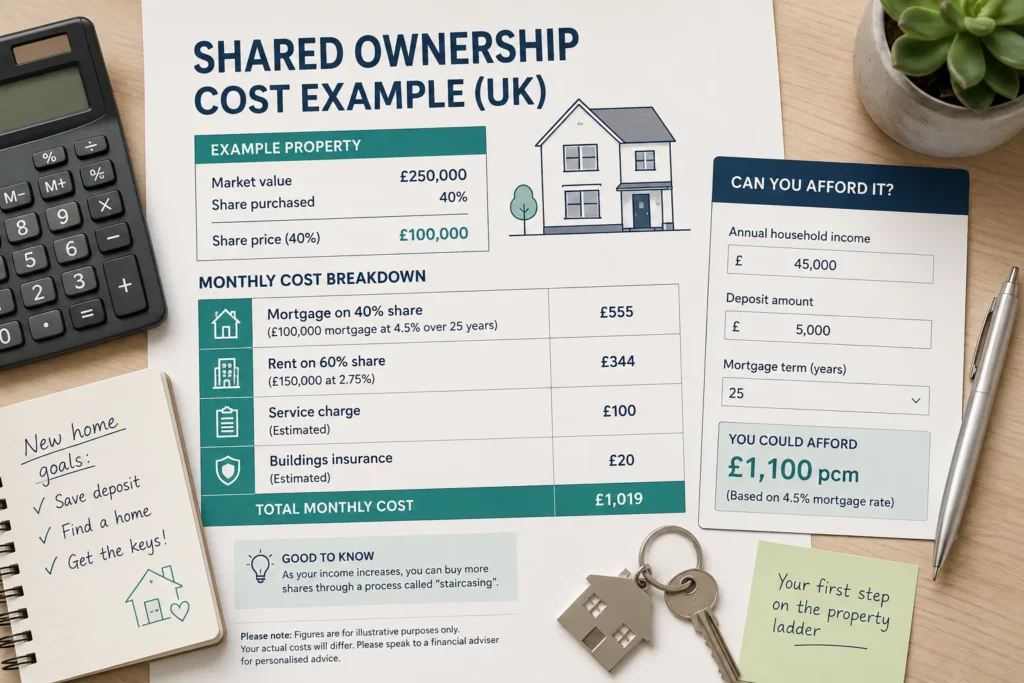
Take a £400,000 property where you buy a 50% share. Your mortgage covers £200,000, at a representative 4.5% rate over 25 years, costing roughly £1,110 a month. On the remaining 50% you don’t own, rent at 2.75% of that £200,000 share works out to roughly £458 a month. Add typical service charges for a flat, commonly £100 to £300 a month, and your total monthly outgoing lands somewhere around £1,668 to £1,868.
Compare that against a full private mortgage on the identical £400,000 property at the same 4.5% rate: roughly £2,190 a month. Even accounting for rent and service charges, this shared ownership mortgage arrangement can genuinely save in the region of £300 to £500 a month — while requiring a substantially smaller deposit to get there in the first place.
The Rent Formula That Catches People Out
This is the part that trips up more shared owners than anything else, and it’s worth understanding properly before you commit. The rent on your unowned share isn’t fixed — it’s reviewed annually, typically rising in line with the Retail Price Index (RPI) plus 0.5% under most leases, though some newer schemes use CPI plus 1% instead.
In years of higher inflation, this can mean genuinely noticeable rent increases. Someone who budgeted based on their rent at the point of purchase can find it meaningfully higher two or three years later, purely from the annual review formula, regardless of whether their mortgage payment has changed at all. If you’re planning to hold your shared ownership property for several years before staircasing, model this rent growth into your long-term budgeting from day one — don’t assume today’s figure holds steady.
Staircasing: Buying More of Your Home
Staircasing lets you purchase additional shares in your property over time, gradually reducing your rent and increasing your ownership stake. Each additional share is bought at the property’s current market value at the point of staircasing — which means if local prices have risen since your original purchase, staircasing later genuinely costs more per percentage point than it would have cost earlier.
Most buyers fund staircasing purchases through remortgaging their existing shared ownership mortgage onto a larger share, or occasionally through a separate loan. The process itself requires a fresh valuation, a mortgage offer, and a solicitor to handle the legal transfer — it’s a genuine legal transaction, not a simple top-up payment.
The 1% Staircasing Rule That Changed the Game
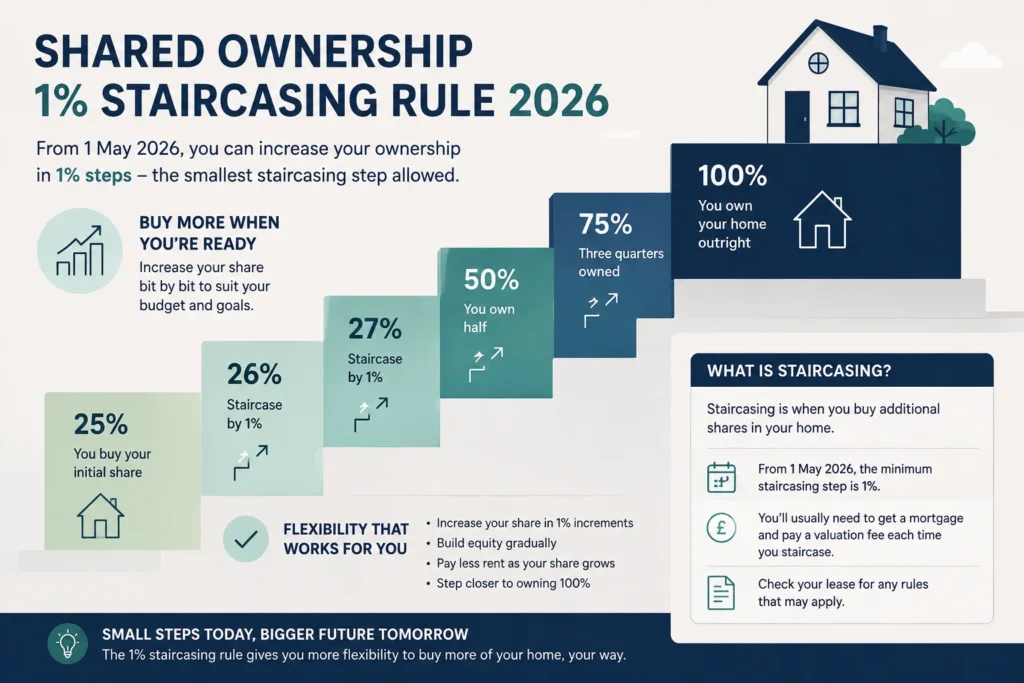
This is a genuinely significant recent change worth knowing about specifically. On homes bought through the government’s Affordable Homes Programme (2021-2026), buyers can now staircase in 1% increments each year for the first 15 years, rather than being locked into the old, much larger 10% or 25% minimum purchase blocks that made staircasing prohibitively expensive for many.
There’s typically no administrative fee for these small 1% purchases, and the price of each 1% share is based on the property’s original cost, adjusted in line with the House Price Index rather than a fresh individual valuation each time — a genuinely more accessible and predictable route to gradually building equity than older shared ownership leases allowed. One important catch: unused years can’t be rolled over. If you don’t buy your 1% in a given year, that year’s allowance is simply gone, not banked for later.
This 1% rule doesn’t apply universally — it’s specific to newer, grant-funded homes under this particular programme. Older leases and existing shared ownership homes may still operate under the traditional, larger staircasing increments, so always check your specific lease rather than assuming the 1% option applies to your property.
What Service Charges Add on Top
Shared ownership properties are almost always leasehold, which brings service charges into the monthly cost picture regardless of what percentage you own. For flats specifically, these typically run £100 to £300 a month, covering building maintenance, management, and buildings insurance. Ground rent, historically another cost layer, is increasingly £0 on newer schemes following recent leasehold reform, though it’s worth confirming this specifically for any property you’re considering rather than assuming it across the board.
The Genuine Downsides
It’s worth being honest about the trade-offs rather than only presenting the affordability upside. You’re paying both a mortgage and rent simultaneously, which some buyers find psychologically harder than a single combined payment, even when the total is genuinely lower than buying outright. Rent increases via the RPI-plus formula can, in higher-inflation years, meaningfully outpace what you’d budgeted. Staircasing gets progressively more expensive if local property values rise, since each additional share is priced at current market value, not your original purchase price. And not every mortgage lender offers shared ownership products, meaning your choice of lender is genuinely narrower than for a standard mortgage, often making a broker experienced specifically in shared ownership worth using.
A few things worth knowing:
- Rent, deposit percentages, and staircasing rules vary by property, lease, and housing provider — always check the specific key information document rather than assuming universal scheme rules
- Stamp Duty Land Tax applies differently on shared ownership purchases, with options to pay on the full property value upfront or in stages as you staircase — get this confirmed by your solicitor before completion
- The 1% staircasing rule only applies to specific newer, grant-funded homes — most older shared ownership leases use larger traditional staircasing increments
- Two affordability checks typically apply: one for the mortgage on your share, and a wider one covering your total monthly outgoing including rent and service charges
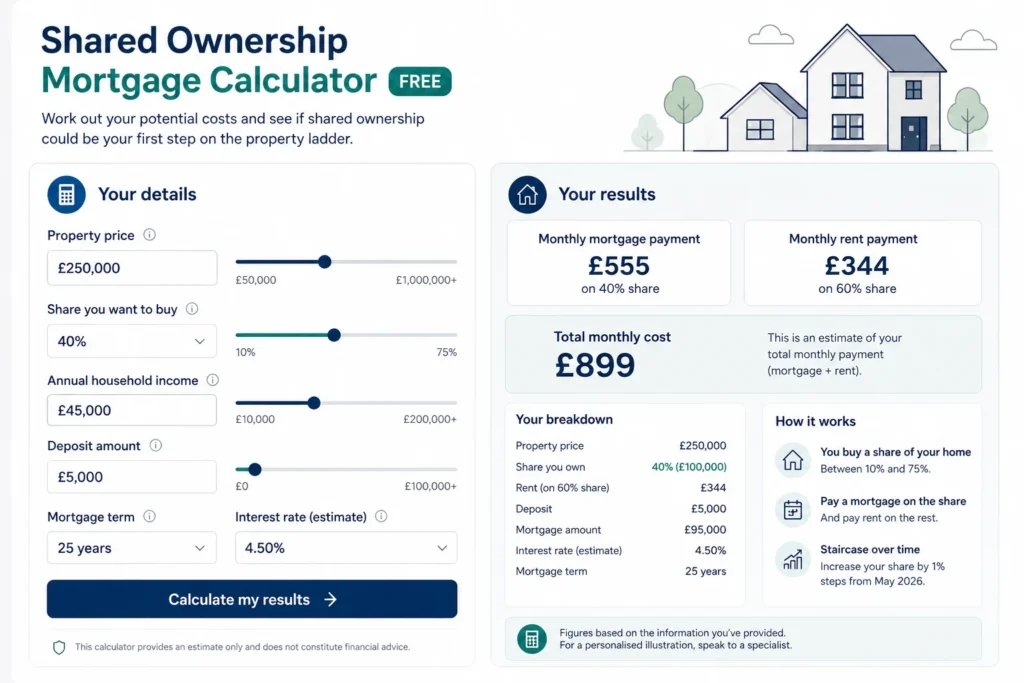
Work out your real monthly cost, including rent, service charges and different staircasing scenarios, using our shared ownership mortgage calculator.
Frequently Asked Questions
How does a shared ownership mortgage work?
You buy a percentage of a property, typically 10% to 75%, through a genuine mortgage covering only that share, while paying subsidised rent to a housing association on the portion you don’t own. Over time, you can buy additional shares through staircasing, potentially reaching full ownership.
Who is eligible for shared ownership in the UK?
Your household income needs to be £80,000 a year or less (£90,000 in London), and you need to be unable to afford a suitable property outright. Eligibility extends beyond first-time buyers to former owners and existing shared owners looking to move.
How much does shared ownership rent increase each year?
Most leases review rent annually in line with the Retail Price Index plus a fixed percentage, commonly RPI plus 0.5%, though some newer schemes use CPI plus 1%. In higher-inflation years, this can mean meaningful rent increases.
What is the 1% staircasing rule?
On homes bought through the government’s Affordable Homes Programme (2021-2026), buyers can staircase in 1% increments each year for the first 15 years, typically without an administrative fee, making it more affordable to gradually build ownership than older, larger staircasing increments allowed.
How much deposit do I need for shared ownership?
Your deposit is calculated against your share value, not the full property price — typically 5% to 10% of your share. On a 40% share of a £300,000 home, a 10% deposit works out at £12,000, compared to £30,000 for an outright purchase deposit.
Can every shared ownership home staircase to 100% ownership?
Not universally. Whether a property can reach full ownership, and in what increments, depends on the specific lease and housing provider. Always check the key information document for the property rather than assuming standard scheme rules apply.
Official sources: check current scheme eligibility at GOV.UK Shared Ownership, read general homebuying guidance at MoneyHelper, and verify any lender or broker on the FCA register. Work out your own real monthly cost with our shared ownership mortgage calculator, or browse every tool on the mortgage calculators homepage.