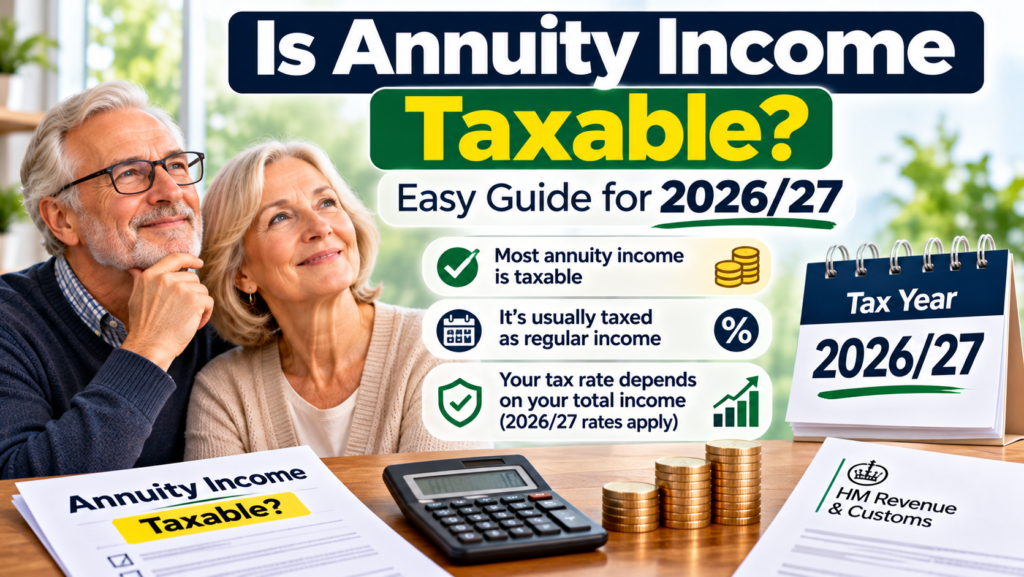
Most people spend months comparing annuity rates, then get a nasty surprise when the first payment arrives smaller than expected. The reason is tax. So, is annuity income taxable? Yes. It counts as ordinary income, taxed at the same rates as a salary.
What catches people out is the State Pension. In 2026/27 the full new State Pension is £12,547.60 a year, and the tax-free Personal Allowance is £12,570. That leaves just £22.40 of allowance for everything else. So if you get the full State Pension and buy an annuity, almost all of the annuity is taxed at 20% from the very first pound.

Is annuity income taxable? The short answer
Yes. Income from a pension annuity is taxed as earned income, whatever it’s called. It’s added to your other income for the year, such as the State Pension, workplace pensions and any earnings or rental profits, and the total is taxed in bands.
For 2026/27, in England, Wales and Northern Ireland, those bands are:
| Your total income | Tax rate |
|---|---|
| Up to £12,570 (Personal Allowance) | 0% |
| £12,571 to £50,270 | 20% |
| £50,271 to £125,140 | 40% |
| Over £125,140 | 45% |
Pensioners get no special allowance any more. The extra age-related allowance was abolished years ago, so you get the same £12,570 as everyone else. And according to the House of Commons Library, the Personal Allowance is due to stay at £12,570 until April 2031, so it won’t rise to catch up with the State Pension.
Scottish taxpayers have different rates and bands on most income, so check the Scottish figures on GOV.UK if that’s you.
Is annuity income taxable when you also get the State Pension?
It is, and this is where the real-world numbers get uncomfortable. The State Pension is paid with no tax taken off, but it still uses up your Personal Allowance first. As PensionBee points out, the full new State Pension is now so close to the allowance that almost any extra income is taxable.
Here’s what that means in pounds. We’ve assumed the full new State Pension of £12,547.60 and different levels of annuity income on top (before tax):
| Annuity income per year | Tax on the annuity | You keep | Tax rate on the annuity |
|---|---|---|---|
| £5,000 | £996 | £4,004 | 19.9% |
| £8,211 | £1,638 | £6,573 | 19.9% |
| £15,000 | £2,996 | £12,004 | 20.0% |
| £20,528 | £4,101 | £16,427 | 20.0% |
| £30,000 | £5,996 | £24,004 | 20.0% |
| £41,055 | £8,873 | £32,182 | 21.6% |
The £8,211 row is what a healthy 65-year-old gets from £100,000 on the best published level rate, according to Pension Bible’s table of Hargreaves Lansdown’s 22 October 2026 examples. After tax, that’s about £6,573, or £548 a month. The £20,528 and £41,055 rows are the same rate on a £250,000 and a £500,000 pot.

The sums are simple. Take your State Pension plus your annuity, subtract £12,570, and tax what’s left at 20%. You can work out your own State Pension with our State Pension Forecast Calculator, and a rough annuity income with the Annuity Rates Calculator. If your State Pension is smaller than the full amount, you’ll have more tax-free allowance left for your annuity.
When does annuity income hit the 40% band?
Not as soon as you might fear. You only pay 40% on income above £50,270 in total. With the full State Pension, that means you’d need annuity income of more than £37,722 a year before any of it is taxed at 40%. On the best age-65 level rate, that’s a pot of roughly £459,000.

Once you’re into the 40% band, the extra tax bites. In the table above, the £41,055 annuity pays £8,873 in tax, because the top £3,333 of the total falls into the 40% band. If you go over £100,000 of total income, your Personal Allowance starts to shrink as well, which creates an effective rate of around 60% on that slice. Most people with an annuity never get near that, but it matters for those with large pots or several pensions.
Is annuity income taxable before you get the State Pension?
Yes, but you might pay nothing. If you retire before State Pension age (currently 66) and the annuity is your only income, your full £12,570 allowance is still available.

Take someone buying at 60 with £100,000. The best published level annuity pays about £7,476 a year. Since that’s well under £12,570, there’s no tax to pay while it’s the only income. When the State Pension starts at 66, the same annuity gets stacked on top of it, and tax of about £1,491 a year kicks in, leaving around £5,985.
This isn’t a reason to buy early, since the rate depends on your age and health, not on tax. But it explains why your take-home can drop when the State Pension begins, and it’s worth planning for.
How is tax on an annuity collected?
Your annuity provider deducts tax before paying you, using a tax code supplied by HMRC. Most people start on the standard code, 1257L, which means the full £12,570 allowance. The State Pension is paid without tax deducted, so HMRC often adjusts your tax code to collect the tax on it through your annuity or another pension. That’s normal, but it can mean your annuity looks like it’s being taxed more than you’d expect.
A few things worth doing:
- Check your tax code in your HMRC online account once your first payments start.
- Watch for an emergency code on the first payments. If your provider doesn’t have a code yet, it may tax you on a temporary basis and overcharge you. You can ask HMRC to correct it and reclaim any overpayment.
- Tell HMRC about other income, such as rent, savings interest or part-time work, so your code is right.
There’s more on how pension tax works on GOV.UK.
Does taking the 25% tax-free cash change the answer?
The tax-free cash itself isn’t taxed, but it does reduce the amount going into the annuity, so the annuity pays less. Take a £100,000 pot and £25,000 of tax-free cash. The remaining £75,000 buys about £6,158 a year at the age-65 best rate. With the full State Pension, tax on that annuity is about £1,227, leaving roughly £4,931.
So the £25,000 in your hand costs you about £2,053 a year of annuity income before tax, and about £1,642 a year after tax. Whether that’s worth it depends on what you’d use the cash for. See our guide to the 25% tax-free pension lump sum and check your limit with the Lump Sum Allowance Calculator.
Is annuity income taxable if it passes to someone else?
It can be, but the rules depend on your age when you die. If you added a joint life annuity or an annuity guarantee period, the payments that continue are generally free of income tax if you die before 75. If you die at 75 or over, they’re taxed as income at your beneficiary’s own marginal rate. So a surviving partner’s annuity is added to their income, not yours.
Legitimate ways to pay less tax on retirement income
Annuity income is taxable, but you have some control over how much tax you pay overall:
- Use both allowances. Couples each have their own £12,570 Personal Allowance, so spreading pension income between you can cut the household’s tax bill.
- Mix in tax-free income. Withdrawals from an ISA aren’t taxed, so they can top up income without adding to your tax bill.
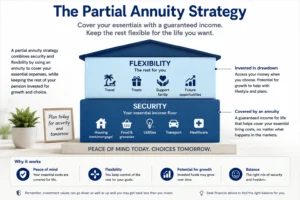
- Consider a partial annuity. Using an annuity for essentials and drawdown for the rest gives you flexibility over how much taxable income you take each year. See our comparison of annuity vs drawdown, and try the Pension Drawdown Calculator.
- Think about timing. Taking income in years before the State Pension starts can use up allowance that would otherwise go to waste.
The right mix depends on your circumstances, so it’s worth speaking to a regulated adviser or using free guidance from Pension Wise.
Common mistakes when thinking about annuity tax
- Comparing gross income only. An annuity of £8,211 isn’t what lands in your account. For many people it’s nearer £6,573.
- Forgetting the State Pension is taxable. It’s paid gross, but it still counts towards your tax bands.
- Assuming pensioners get a bigger allowance. They don’t, and it’s frozen until 2031.
- Ignoring the tax code. A wrong code is the commonest reason people overpay.
- Missing other income. Rent, interest and part-time earnings all stack on top of your pension.
Try it with your own numbers
Start with the Annuity Rates Calculator for a rough annuity income, then take off tax using the table above. For the bigger picture of what your pot could pay, see how much annuity £100,000 will buy and our guide to the best annuity rates 2026. The calculators run in your browser, and what you type isn’t stored or sent anywhere.
Frequently asked questions
Is annuity income taxable in the UK?
Yes. Pension annuity income is taxed as earned income at your marginal rate, added to your other income such as the State Pension.
How much tax will I pay on a £8,211 annuity?
If you also get the full new State Pension of £12,547.60 in 2026/27, about £1,638 a year, leaving around £6,573. If the annuity is your only income, you’d pay no tax.
Is the State Pension taxable?
Yes. It’s paid without tax deducted, but it counts towards your Personal Allowance and your tax bands.
Can I get my annuity paid tax-free?
Not normally. You can take up to 25% of your pension tax-free before buying the annuity, but the income itself is taxable. Annuities bought with non-pension money are usually treated differently, with only part of each payment taxed.
Will my tax-free allowance go up?
Not until April 2031 at the earliest. The Personal Allowance is frozen at £12,570, while the State Pension keeps rising, so more of it gets taxed over time.
Is annuity income taxable after age 75?
Yes. Your own annuity is taxed in the same way at any age. Age 75 only matters for how death benefits are taxed.
Does a joint life annuity change the tax?
Your income is taxed as normal. After you die, your partner’s payments are taxed as part of their income.
Do Scottish taxpayers pay different tax on annuities?
Yes. Scotland has its own income tax bands for most income, so the rates above may differ. Check the Scottish rates on GOV.UK.
Next step
So, is annuity income taxable? Yes, and with the full State Pension it’s taxed at 20% from the first pound. Plan around the take-home figure, not the headline one. Run your numbers through the Annuity Rates Calculator, get quotes from several providers, and use Pension Wise or MoneyHelper for free guidance before you decide.
This article is for general information and isn’t tax or regulated financial advice. MortgageToolsHub isn’t FCA authorised and doesn’t recommend or rank providers. Tax figures are for 2026/27 in England, Wales and Northern Ireland and may change. The worked examples are our own simple calculations that assume the full new State Pension and no other income. Annuity rates come from Hargreaves Lansdown’s published table dated 22 October 2026 (as set out by Pension Bible) and will have changed by the time you read this. Your own position depends on your circumstances. Check any provider or broker on the FCA Register and speak to a regulated adviser or Pension Wise before making a decision.